
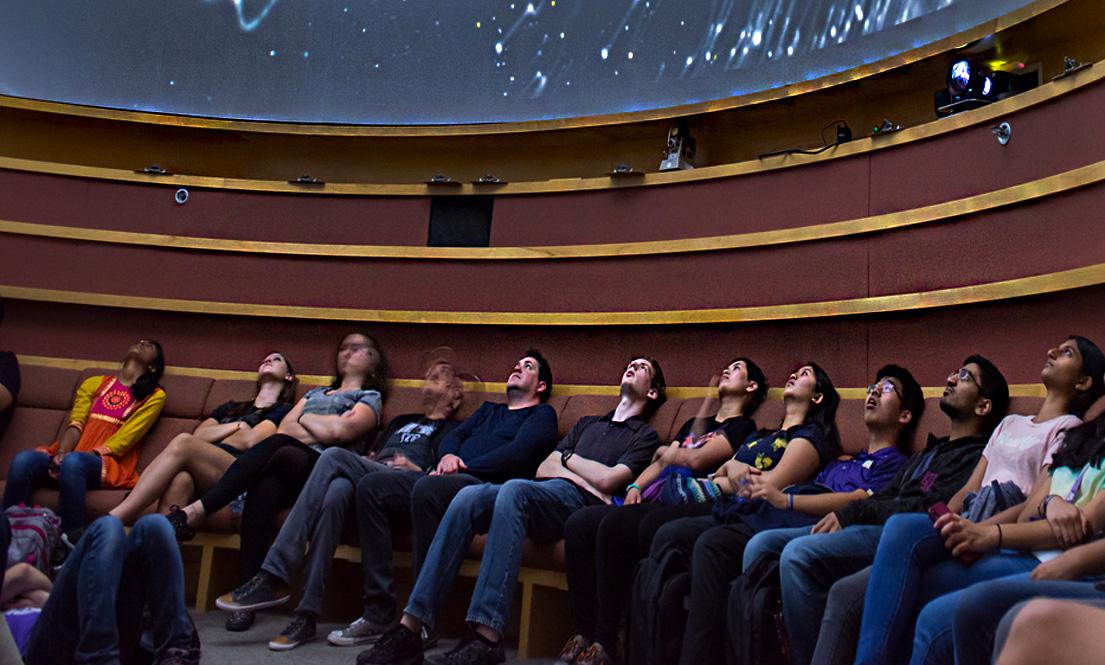
From elementary students to retirees, we believe there’s space for everyone – to explore, question, and be caught up in the mysteries of the universe. Learn more about our planetarium and public outreach.
Outreach programs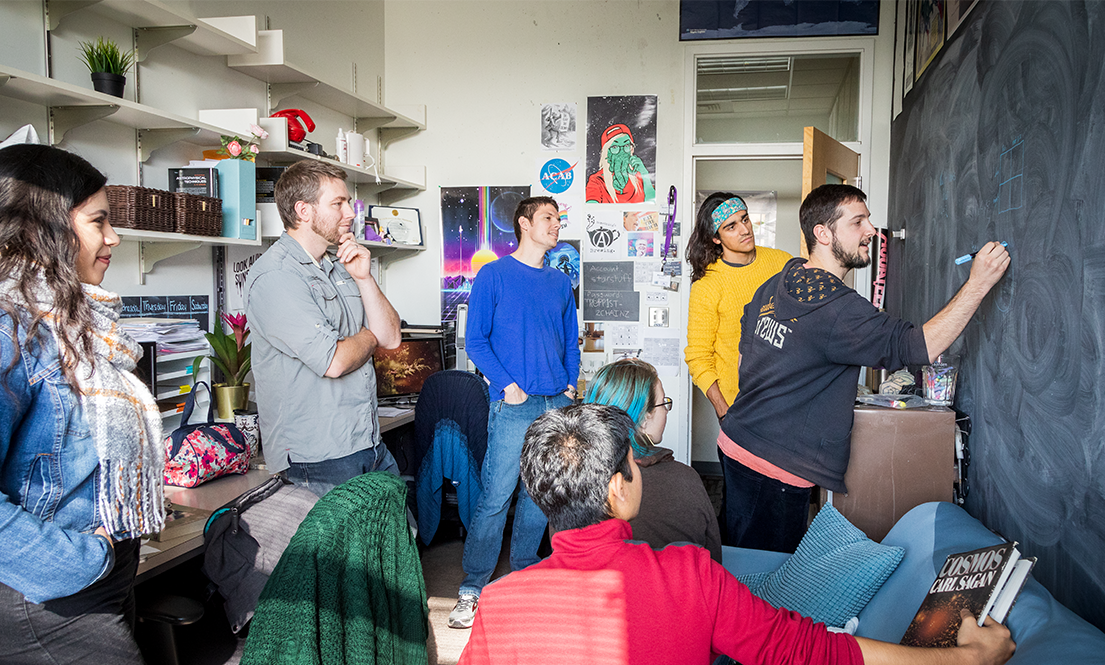
We are committed to fostering an inclusive academic community for all people. From the way we hire to the way we support students, we are investing in a more equitable astronomy.
Equity in Astronomy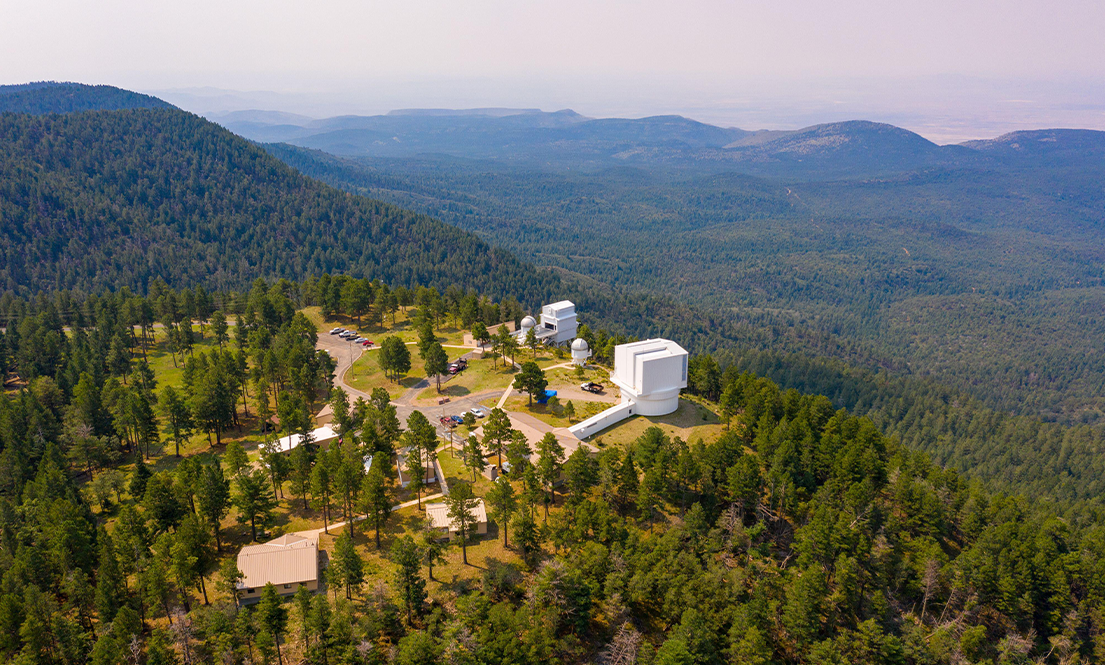
Our graduate students drive innovation every day. Mentored by caring faculty and empowered to do their best work, they go on to successful careers as researchers, educators, and STEM professionals.
Program Details
As an undergraduate major, you will explore the full range of astronomy using cutting-edge tools in a supportive and welcoming environment where your success is a priority.
About the Major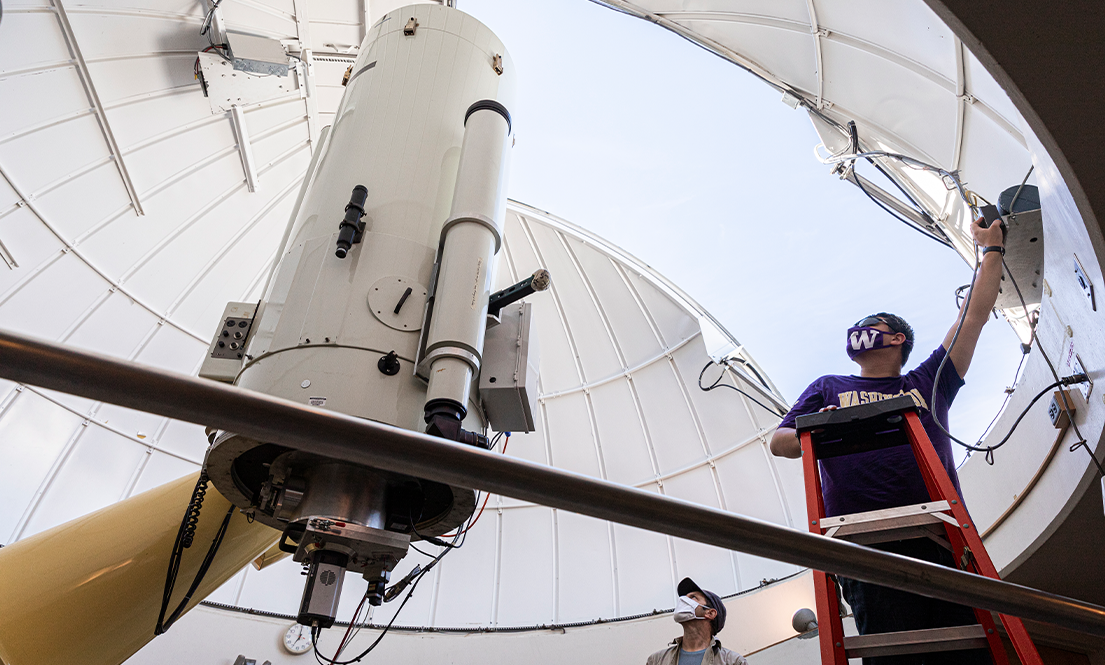
We are engaged in some of the most exciting astronomical projects underway – exploring the origins of the Solar System, searching for cosmic life, digging into galactic formation and more.
Research AreasTogether we are on a quest to the deepest unknown. Reaching back to the beginning of time and into the future, we ask questions about the formation of the universe, the origin of life, and the evolving cosmos. We are a community for the curious – faculty and students learning and exploring together using cutting-edge technology and future-focused approaches to teaching and learning. In the heart of Seattle, a city known for STEM innovation, our department is a nexus of collaboration and discovery, working to expand our collective understanding of the universe.